AnandYogaCentreBook a ₹199 trial

Prenatal yogagentle, trimester-aware

This page is general information, not medical advice. Always practise with your doctor's clearance, in a trimester-aware way and under a trained teacher, and stop and contact your doctor if anything feels wrong.

Prenatal yoga is a gentle, trimester-aware practice that many expecting mothers find helps them stay active, ease common aches and breathe with more calm. It is safest with your doctor's clearance and under a trained teacher, who can guide which poses suit each stage and which to avoid. Yoga supports a healthy pregnancy but is not a substitute for your antenatal care. At Anand Yoga Centre, classes are women-first, in Kolathur.

A quick note

What safe prenatal practice means

Prenatal yoga is yoga adapted for pregnancy. The focus shifts to gentle movement, steady breathing, hip and pelvic openness and rest, rather than deep stretching or intense flows. Deep twists, strong backbends, inversions and poses that press on the belly are left out, and many poses are supported with cushions, blocks or a wall. The right practice changes with each trimester, so it is best done with your doctor's clearance and under a trained prenatal teacher who can adjust poses to your body and stage.

How it helps

How prenatal yoga may help

Eases common aches

Gentle hip openers and spine movement may help with the low-back and hip tightness that many mothers feel as pregnancy progresses. A trained teacher keeps every pose within a safe range.

Supports breath and calm

Slow breathing and relaxation are a core part of prenatal practice. Many mothers find this helps them rest better and feel more steady through the changes of pregnancy.

Builds gentle strength and balance

Supported standing and seated poses help maintain strength and balance as the body changes. This can help you feel more grounded day to day, always practised gently.
The practice

A gentle prenatal sequencewith clearance, every trimester

Practise only with your doctor's clearance and, ideally, a trained teacher. Keep every pose gentle and supported, and stop and rest if anything feels off.

Gentle warm-up
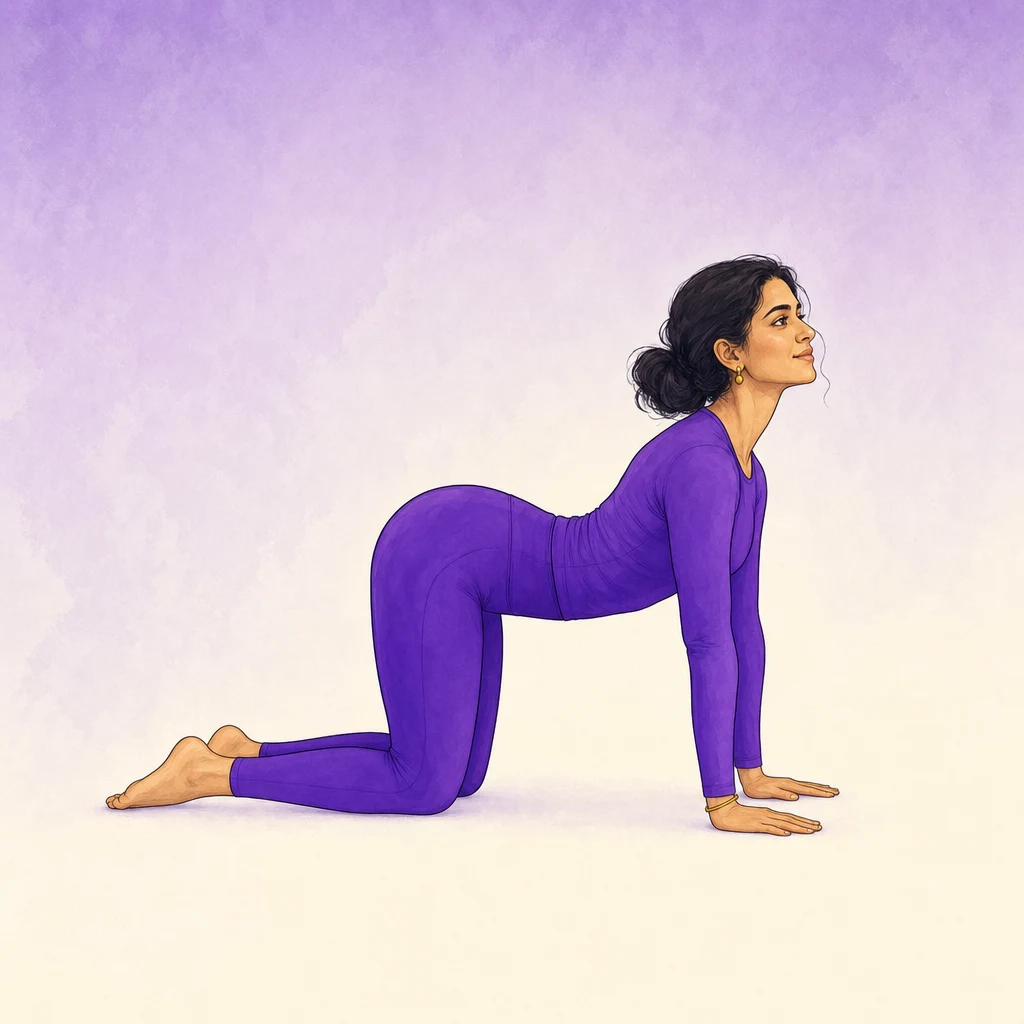
Cat-Cow for prenatal yoga1
Cat-Cow
Marjaryasana-Bitilasana
⚠ Caution

A gentle, supported way to move the spine and ease back tension, kept small and slow during pregnancy.

Breath. Inhale to soften the belly and look up, exhale to round gently.

Take care. Keep the movement small and never force the arch of the back.

Learn this pose →
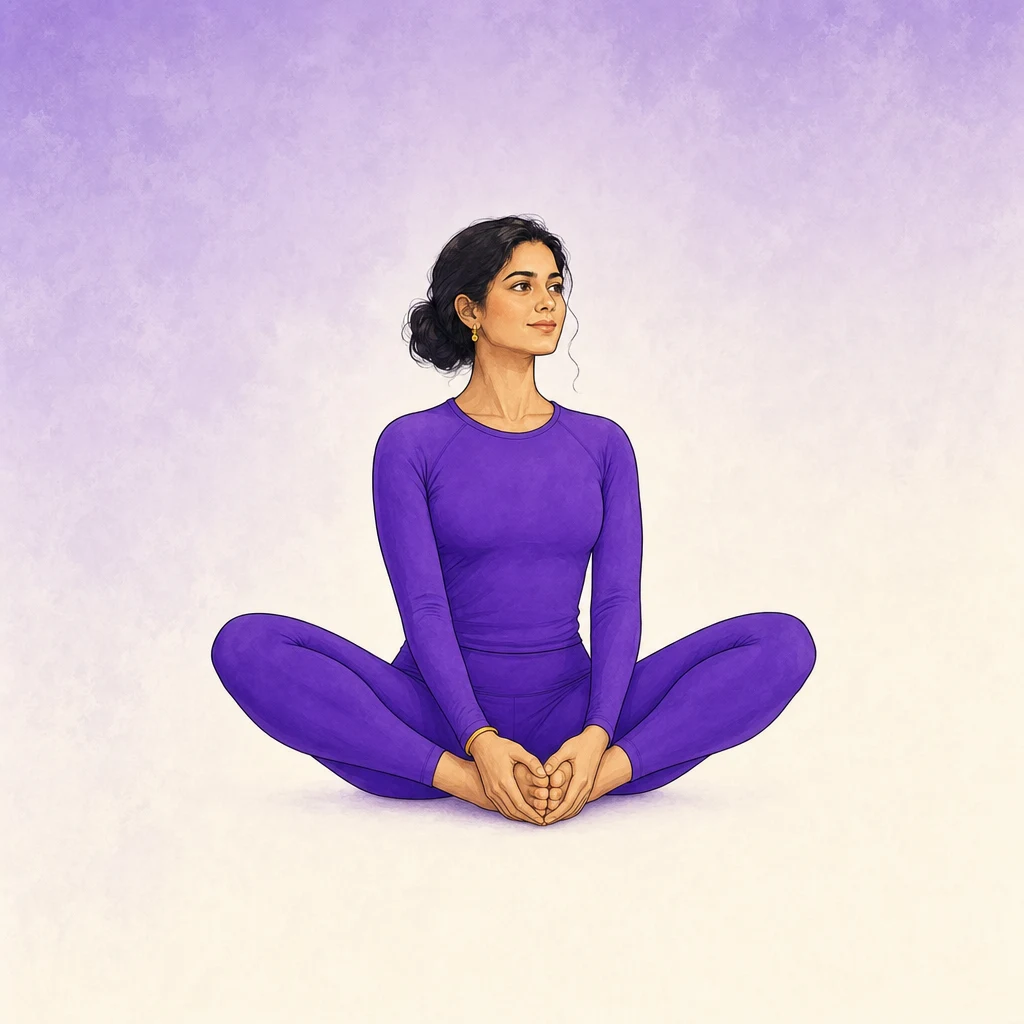
Bound Angle Pose for prenatal yoga2
Bound Angle Pose
Baddha Konasana
⚠ Caution

Opens the hips and inner thighs gently, which many mothers find soothing as the body prepares for later stages.

Breath. Breathe slowly and evenly while you sit tall.

Take care. Sit on a cushion and place blocks under the thighs; do not push the knees down.

Learn this pose →
Gentle standing and resting poses
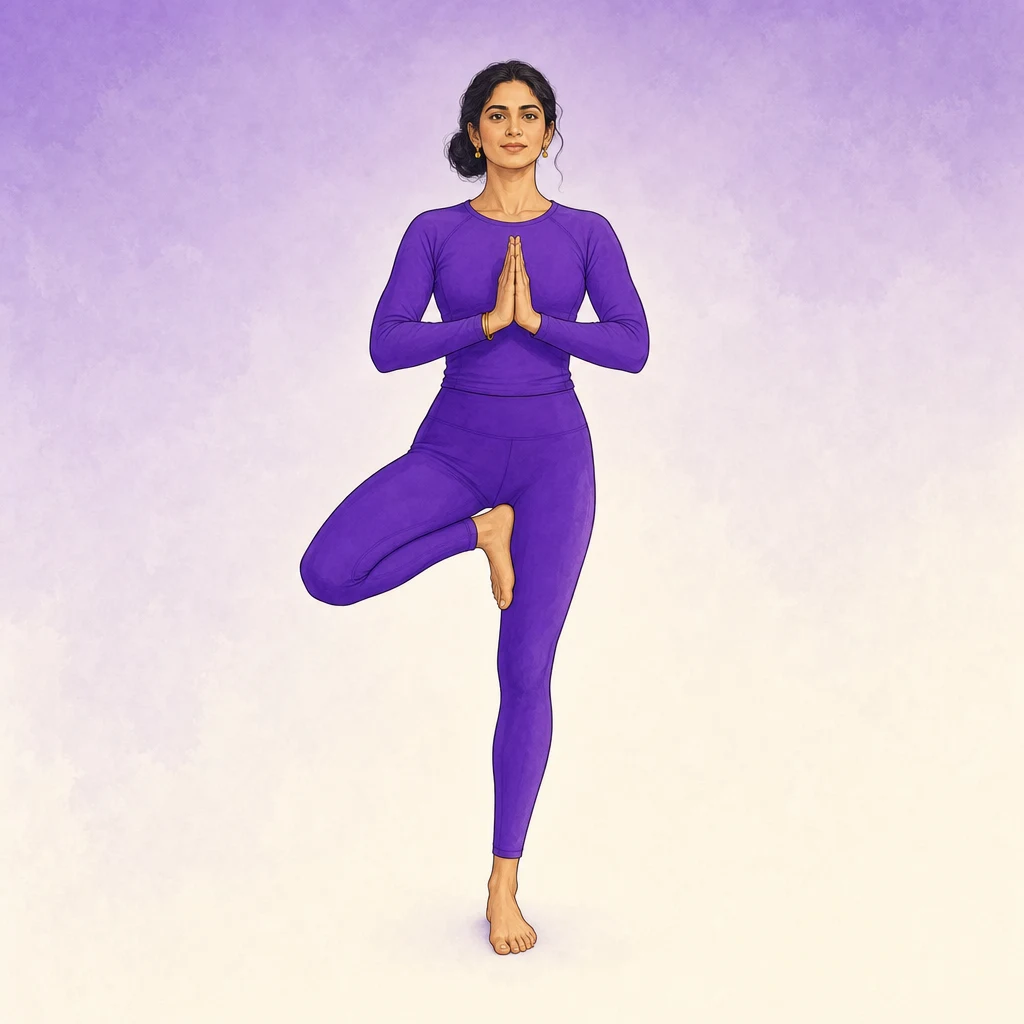
Tree Pose (supported) for prenatal yoga3
Tree Pose (supported)
Vrksasana
⚠ Caution

A supported balancing pose that helps maintain steadiness and gentle leg strength as the centre of gravity shifts.

Breath. Breathe steadily and softly while you balance.

Take care. Always practise near a wall or chair for support; rest the foot low, not against the knee.

Learn this pose →
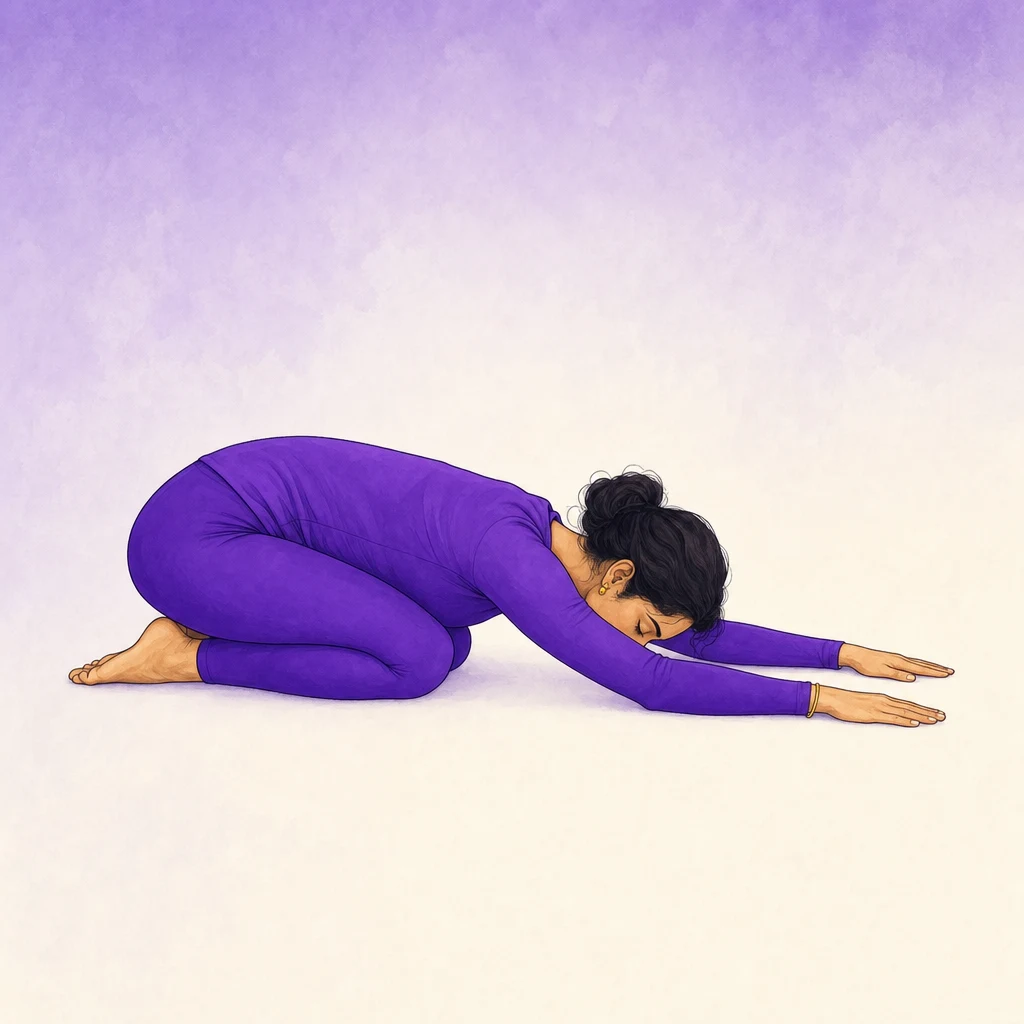
Child's Pose (knees wide) for prenatal yoga4
Child's Pose (knees wide)
Balasana
⚠ Caution

A restful pose with the knees spread wide to make room for the belly, helping the back and hips relax.

Breath. Breathe slowly into the back of the ribs.

Take care. Keep the knees wide and use a cushion under the chest or hips; come out if there is any pressure on the belly.

Learn this pose →
Rest and breathing
5. Side-Lying Rest
Savasana, left-side variation
⚠ Caution

Deep rest on the left side, supported with cushions, is a comfortable way to relax in later pregnancy and let the breath settle.

Breath. Breathe slowly and naturally, letting the body soften.

Take care. From the second trimester onward, avoid lying flat on the back; rest on the left side with support.

This page is general information, not medical advice. Always practise with your doctor's clearance, in a trimester-aware way and under a trained teacher, and stop and contact your doctor if anything feels wrong.

Stay safe

Who should take care

  • Always get your doctor's clearance before starting or continuing prenatal yoga, and practise under a teacher trained in prenatal yoga.
  • Avoid deep twists, strong backbends, inversions, belly-down poses and any pose that presses on the abdomen.
  • From the second trimester, avoid lying flat on your back for long; rest on your left side with support instead.
  • Skip hot yoga, jumping or bouncing, and stop and rest if you feel dizzy, breathless, any pain or unusual symptoms.
Important

When to see your doctor

Yoga complements, not replaces, your antenatal medical care. Always practise with your doctor's clearance, in a trimester-aware way and under a trained teacher, and stop and contact your doctor if anything feels wrong.

Practise with us

Learn it gently, women-first, in Kolathur

Start with a gentle class

Our Hatha classes are slow and alignment-led, the safest way to learn these poses with Sailaja.

Women's wellness programs

See our programs for women's wellness, prenatal and more.

Simple, honest pricing

₹199 first class, ₹2,000 a month unlimited. See the pricing page.

Reviewed by Sailaja Anand, yoga instructor at Anand Yoga Centre. Last updated 2026-06-14.

This page is general information, not medical advice. Always practise with your doctor's clearance, in a trimester-aware way and under a trained teacher, and stop and contact your doctor if anything feels wrong.

Questions

Prenatal yoga: common questions

Is yoga safe during pregnancy?
For most healthy pregnancies, gentle prenatal yoga is considered safe with your doctor's clearance and under a trained teacher. It avoids deep twists, strong backbends, inversions and pressure on the belly. If you have any complications or a high-risk pregnancy, speak with your doctor first, as some practice may not be advised for you.
Which trimester is best to start prenatal yoga?
Many mothers start gentle prenatal yoga in the second trimester, once early changes settle, though it can be practised in all trimesters with clearance. The first trimester calls for an especially gentle approach. Whichever stage you are at, begin with your doctor's clearance and a teacher trained in prenatal yoga who can guide you safely.
Which yoga poses should I avoid during pregnancy?
It is best to avoid deep twists, strong backbends, full inversions, belly-down poses and any pose that presses on the abdomen. From the second trimester, also avoid lying flat on your back for long. Hot yoga, jumping and bouncing are not advised. A trained teacher will offer safe, supported alternatives for each stage.
Can prenatal yoga help with labour and delivery?
Many mothers find that the breathing, hip openness and calm built through prenatal yoga help them feel more prepared and at ease. Yoga is a gentle support for your body and mind, not a guarantee of any particular outcome. Your birth experience depends on many factors, so follow the guidance of your doctor and birth team.
How often can I do prenatal yoga?
Many mothers practise gentle prenatal yoga a few times a week, listening to their body each day. Some days a pose feels fine and another day it may not, so it is normal to adjust. Keep sessions gentle, rest whenever you need to, and follow the pace your teacher and doctor suggest.

Practise gently through pregnancy

Book a ₹199 first class and learn safe, trimester-aware prenatal yoga with Sailaja in Kolathur.

Book a ₹199 trialSee programmes