AnandYogaCentreBook a ₹199 trial

Yoga for PCOSgentle and supportive

This page is general wellbeing information, not medical advice. Yoga does not diagnose, treat or cure PCOS. Please see your doctor for diagnosis and treatment, and check before starting any new exercise.

Yoga is not a cure for PCOS, and it does not treat or reverse it. What a gentle, regular practice may do is support the stress, low mood and tension that many women with PCOS experience, alongside your doctor's care. At Anand Yoga Centre we teach calm hip openers, forward folds and supported poses, with breathwork, in small classes. We are women-first, in Kolathur.

A quick note

What is PCOS?

PCOS (polycystic ovary syndrome) is a common hormonal condition that can affect a woman's menstrual cycle and wellbeing. It is diagnosed and managed by your doctor. Yoga does not diagnose or treat it. We simply offer a gentle, supportive practice you can do alongside the care your doctor provides.

How it helps

How gentle yoga may support you

Calming the stress response

Living with a long-term condition can be stressful. Slow, breath-led yoga and relaxation traditionally help many women feel calmer and more rested, which is good for overall wellbeing alongside your doctor's care.

Gentle, accessible movement

You do not need to be flexible or fit to begin. Gentle yoga is accessible across ages and fitness levels, and regular gentle movement is something many women find supports how they feel in their body day to day.

Hip and pelvic mobility

Soft hip openers and forward folds bring gentle movement and circulation to the hips and lower back. Many women simply find these poses comfortable, grounding and a kind way to spend time with the body.
The practice

A gentle, supportive sequencesettle, open, rest

Keep everything soft and supported, and never force a stretch. During heavy menstruation, skip strong inversions and deep twists and choose restful poses instead.

Settle and warm up
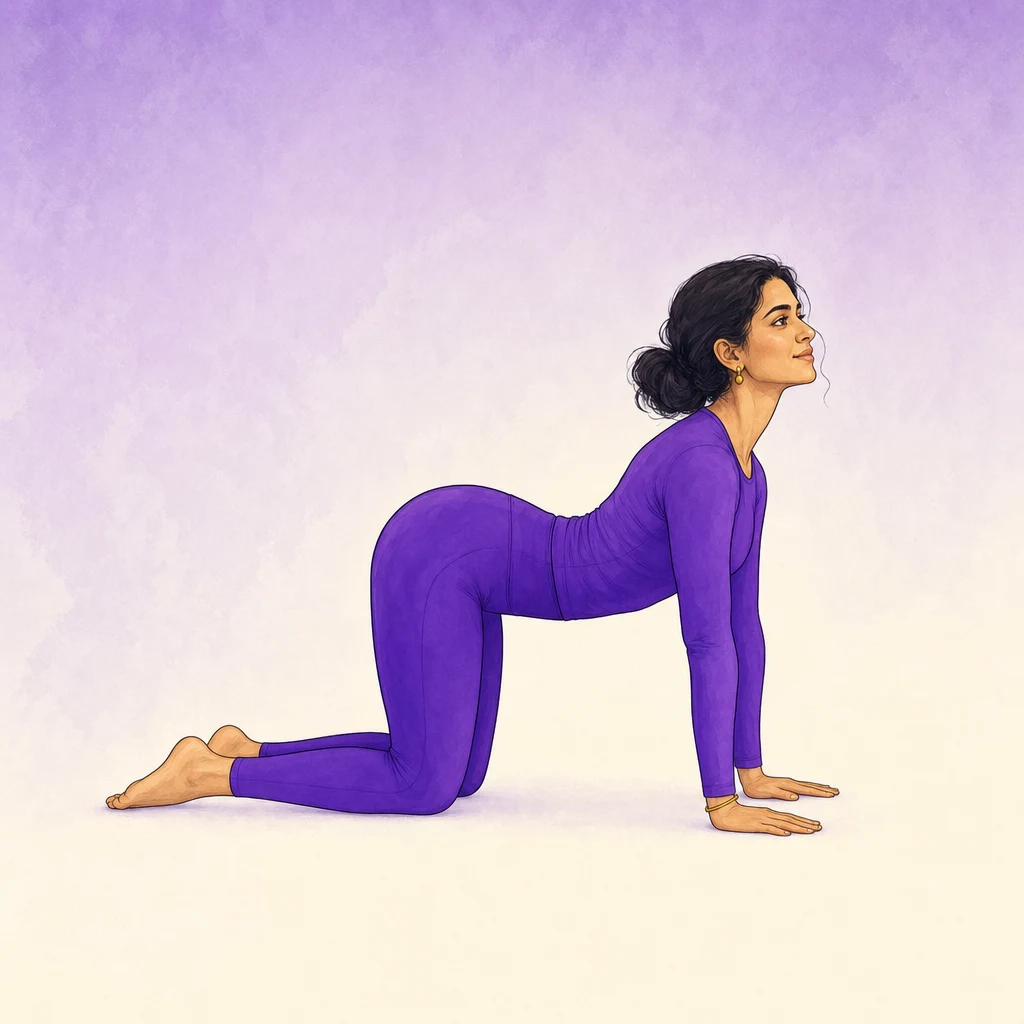
Cat-Cow for pcos1
Cat-Cow
Marjaryasana-Bitilasana
Beginner

A soft, flowing warm-up that gently mobilises the spine and links movement to breath, helping you arrive on the mat and settle.

Breath. Inhale to arch (cow), exhale to round (cat). Move slowly with the breath.

Take care. Keep the movement small and comfortable. Stop if the wrists or lower back feel strained.

Learn this pose →
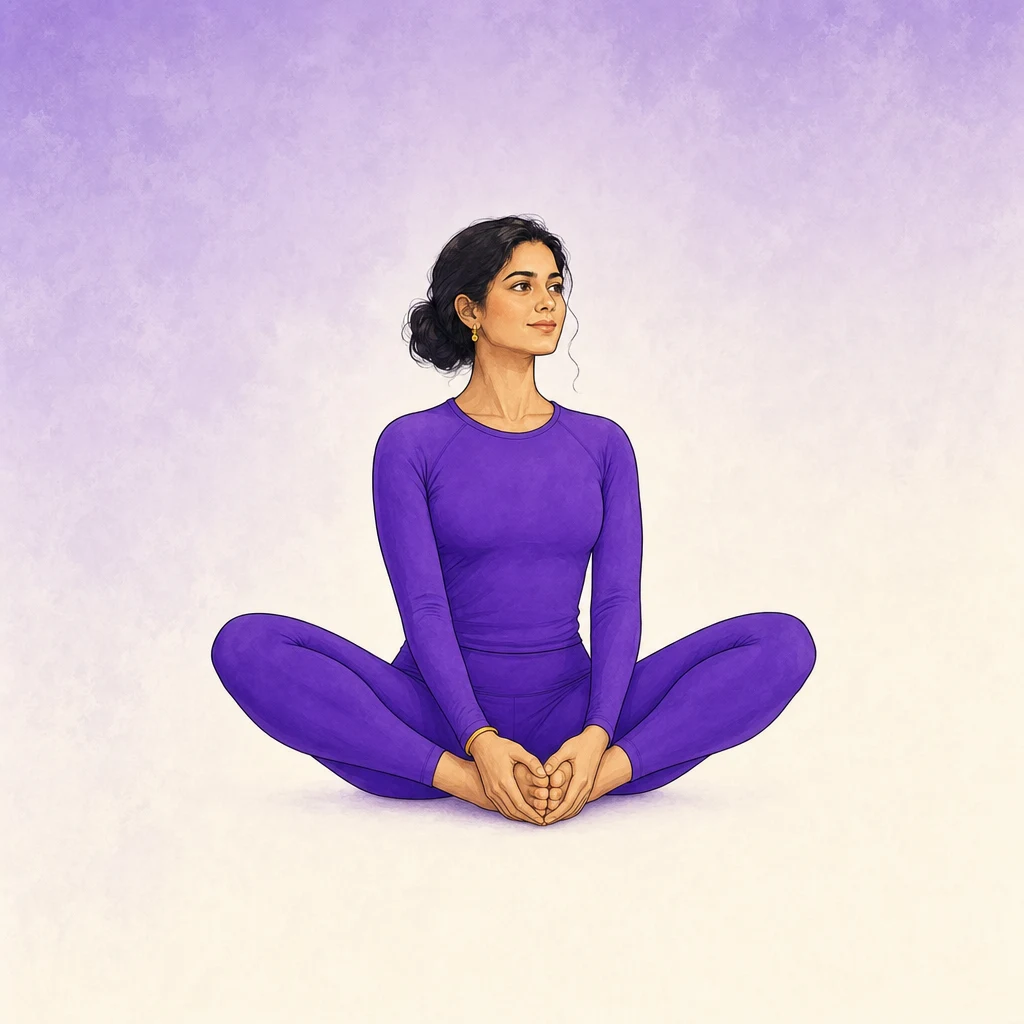
Bound Angle (Butterfly) for pcos2
Bound Angle (Butterfly)
Baddha Konasana
Beginner

A traditional, restful hip opener. Sitting with the soles together and letting the knees relax is a gentle way to release the hips and groin.

Breath. Breathe slowly and evenly. Let the exhale soften the hips.

Take care. Never force the knees down. Sit on a folded blanket and place cushions under the thighs for support.

Learn this pose →
Gentle opening
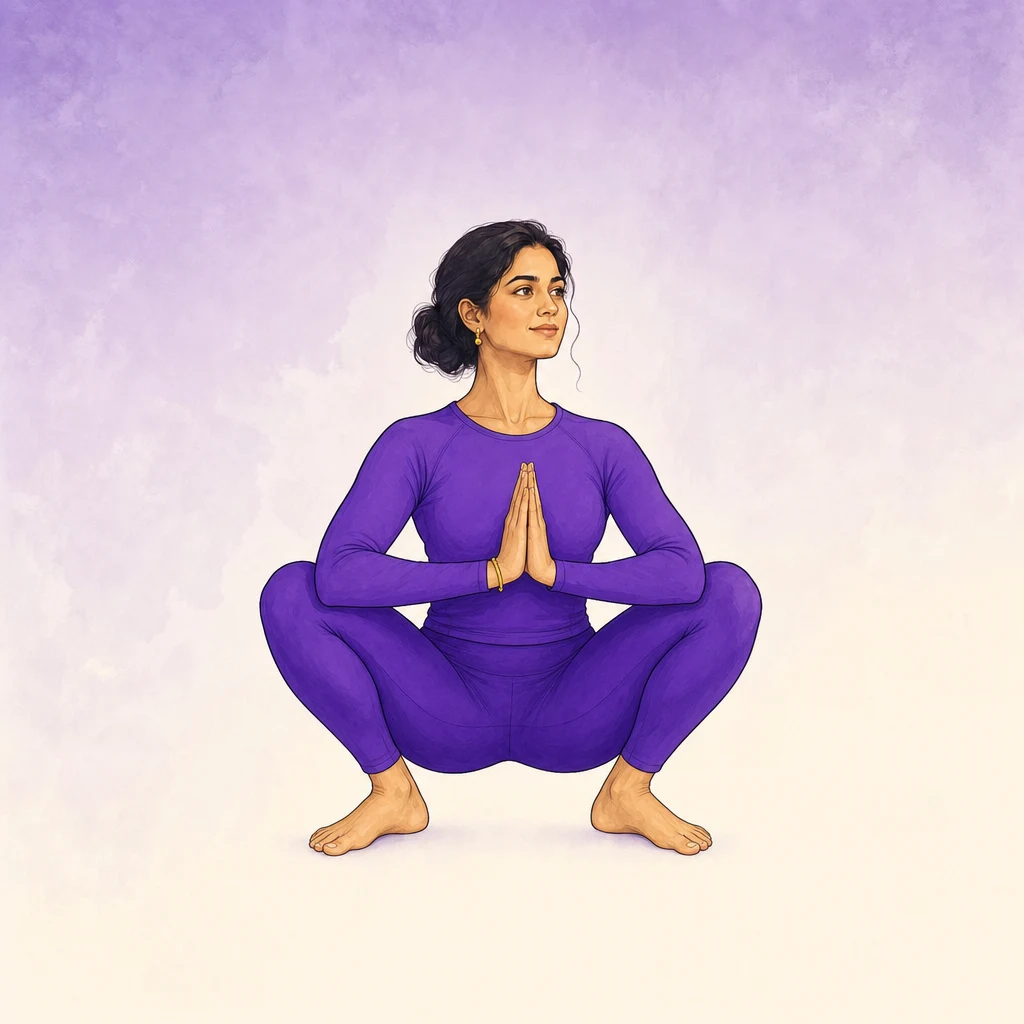
Garland Pose (supported squat) for pcos3
Garland Pose (supported squat)
Malasana
Intermediate

A deep but gentle squat that opens the hips and lower back. Many women find it grounding. A block under the seat makes it accessible.

Breath. Breathe steadily, keeping the chest lifted and the spine long.

Take care. Use a block or rolled blanket under the seat. Skip or modify if you have knee discomfort.

Learn this pose →
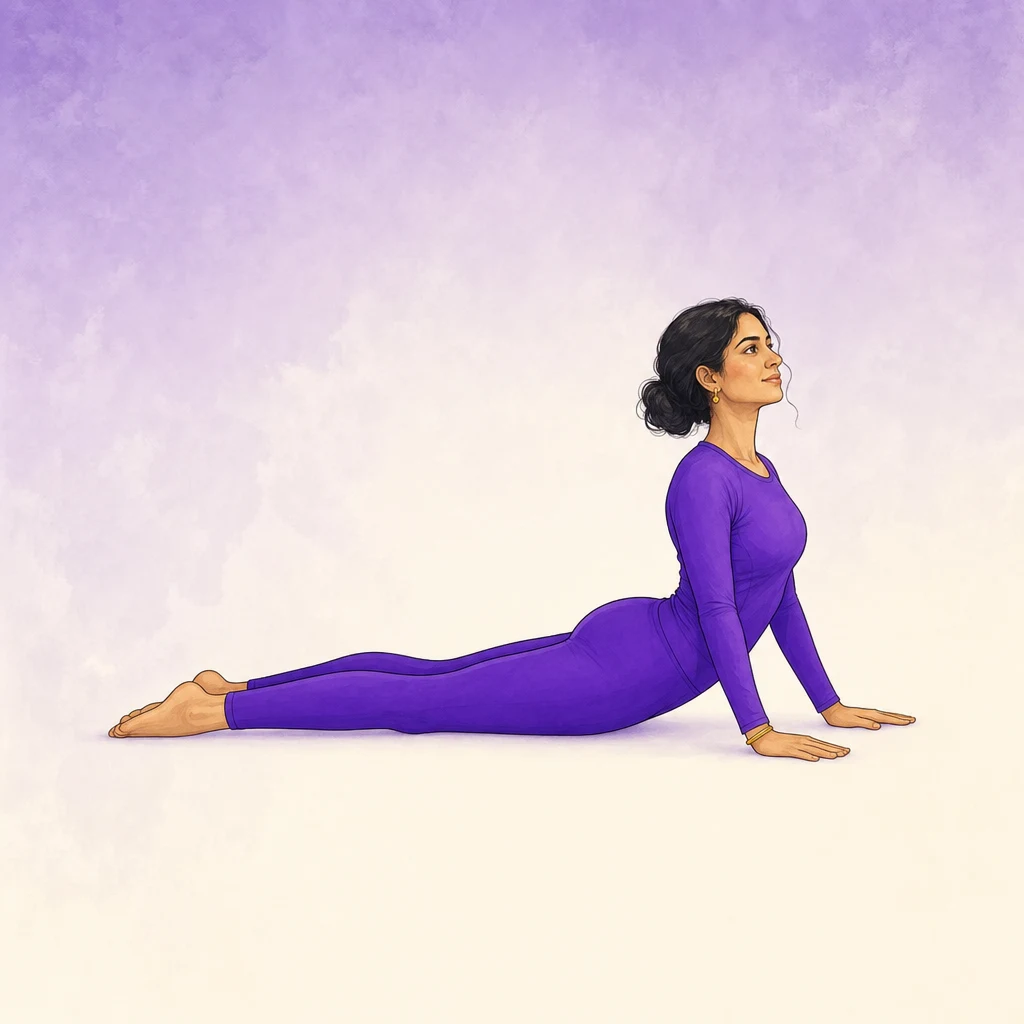
Cobra Pose for pcos4
Cobra Pose
Bhujangasana
Intermediate

A soft backbend that opens the chest and shoulders and traditionally helps relieve a tired, hunched upper back.

Breath. Inhale to lift gently, exhale to lower. Keep the lift small.

Take care. Lift only as far as is comfortable. Avoid if pregnant or with recent abdominal surgery.

Learn this pose →
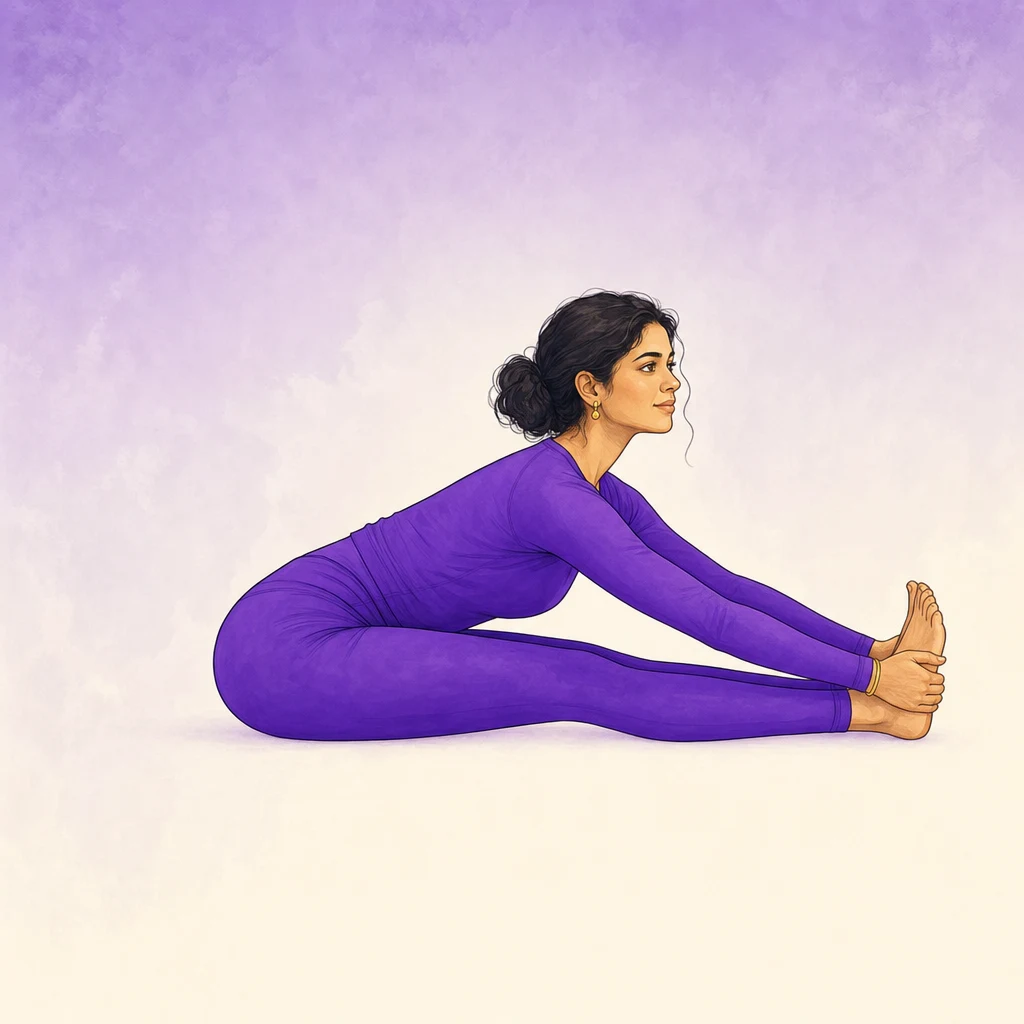
Seated Forward Bend for pcos5
Seated Forward Bend
Paschimottanasana
Intermediate

A quietening forward fold that lengthens the back of the body. It is traditionally used as a calming, inward pose.

Breath. Inhale to lengthen the spine, exhale to fold a little. Never strain.

Take care. Bend the knees and use a strap. Do not pull or force the fold.

Learn this pose →
Supported rest
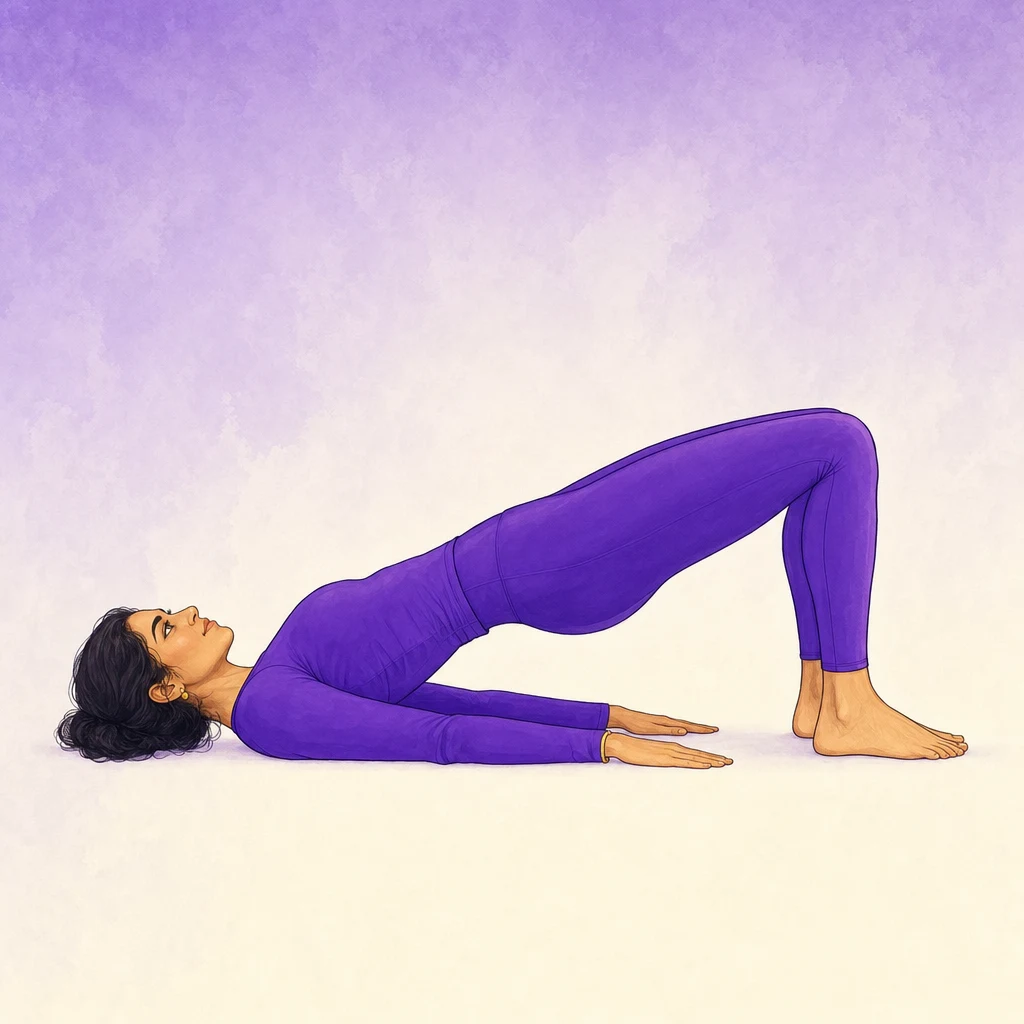
Supported Bridge for pcos6
Supported Bridge
Setu Bandhasana
Beginner

A gentle, supported lift that opens the front of the body and is traditionally used to ease tension and calm the mind.

Breath. Breathe slowly and evenly while resting on the support.

Take care. Place a block or bolster under the hips for a restful, supported version. Come down slowly.

Learn this pose →
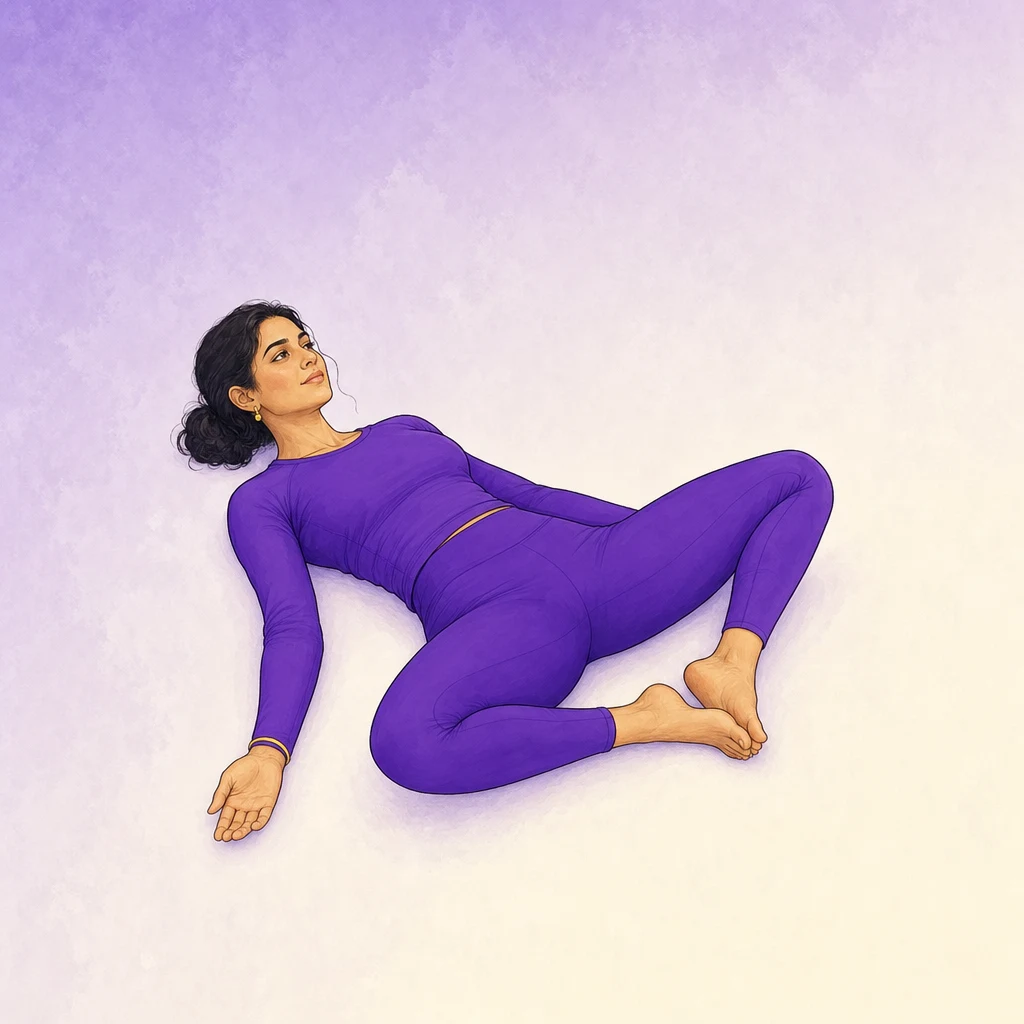
Reclined Bound Angle for pcos7
Reclined Bound Angle
Supta Baddha Konasana
Beginner

A restorative resting pose that supports the spine and lets the hips and chest soften. A lovely, calming way to finish.

Breath. Let the breath become slow and quiet. Rest here for a few minutes.

Take care. Support the back and thighs with blankets and pillows so there is no strain at all.

Learn this pose →

This page is general wellbeing information, not medical advice. Yoga does not diagnose, treat or cure PCOS. Please see your doctor for diagnosis and treatment, and check before starting any new exercise.

Stay safe

Who should take care

  • During heavy menstruation, skip strong inversions, deep twists and intense abdominal work, and choose gentle, restful poses instead.
  • Never force a stretch. Use blocks, blankets and straps so every pose feels supported and comfortable.
  • If you are pregnant or trying to conceive, tell your teacher first so poses can be adapted, and follow your doctor's guidance.
  • Stop and rest if you feel dizzy, breathless or any sharp pain, and speak to your doctor before continuing.
Important

When to see your doctor

Yoga may support your general wellbeing, but it does not replace medical care. Please see your doctor for the diagnosis, treatment and monitoring of PCOS, and check with them before starting any new exercise.

Practise with us

Learn it gently, women-first, in Kolathur

Start with a gentle class

Our Hatha classes are slow and alignment-led, the safest way to learn these poses with Sailaja.

Women's wellness programs

See our programs for women's wellness, prenatal and more.

Simple, honest pricing

₹199 first class, ₹2,000 a month unlimited. See the pricing page.

Reviewed by Sailaja Anand, yoga instructor at Anand Yoga Centre. Last updated 2026-06-14.

This page is general wellbeing information, not medical advice. Yoga does not diagnose, treat or cure PCOS. Please see your doctor for diagnosis and treatment, and check before starting any new exercise.

Questions

Yoga for PCOS: common questions

Can yoga cure PCOS?
No. Yoga cannot cure, treat or reverse PCOS, and we never make that claim. PCOS is a medical condition diagnosed and managed by your doctor. A gentle, regular yoga practice may simply support the stress and wellbeing many women experience, alongside your doctor's care.
Which type of yoga is best if I have PCOS?
Gentle, slow and restorative styles tend to suit most women best. Calm hip openers, supported forward folds, soft backbends and breathwork are kinder than fast, strenuous flows. In our small classes we adapt poses to you, so you can practise at a comfortable, sustainable pace.
Will yoga help me lose weight or get pregnant?
We do not promise weight loss or conception, as these depend on many medical and personal factors. What gentle yoga may offer is calmer, more regular movement and a supported way to care for your wellbeing. For weight, fertility and treatment questions, please speak with your doctor.
How often should I practise?
A short, gentle practice a few times a week is more sustainable than occasional intense sessions, and consistency matters more than intensity. Begin slowly, rest when you need to, and let the practice fit comfortably around your life rather than adding pressure.
Is it safe to do yoga during my period if I have PCOS?
Yes, gentle yoga is usually fine and many women find it comforting. During heavy bleeding it is best to avoid strong inversions, deep twists and intense abdominal poses, and to choose soft, restful postures instead. Always listen to your body and rest when you need to.

Practise gently, women-first

Book a ₹199 first class and learn a calm, supportive practice with Sailaja in Kolathur.

Book a ₹199 trialSee programmes